 repowise
 mnehmos/mnehmos.multi-agent.framework


Mnehmos / mnehmos.multi-agent.framework
github.com/mnehmos/mnehmos.multi-agent.frameworkIndexed at 57e1bcfUp to date with upstream
What is mnehmos.multi-agent.framework?
mnehmos.multi-agent.framework is a biological architecture for artificial minds that organizes sensation, reflex, memory, and action into coordinated loops. It is designed to extend chatbots with agency, persistent memory, sensory-motor integration, and specialized coordination. The repository is primarily JavaScript and provides templates, documentation, and MCP integration guides.
Written by a model from the README and the source
73 files and 21 symbols in 2 modules, written in JavaScript.
Code health
Use Mnehmos/mnehmos.multi-agent.framework in your agent
Point Claude Code, Cursor, Codex or VS Code at this repository. Your agent gets the index this page is built from: cited answers, callers, history and health for any file.
- 1.In Claude, open Customize → Connectors, click +, then Add custom connector. On a Team or Enterprise plan an owner adds it first under Organization settings → Connectors.
- 2.Paste the server URL below as the Remote MCP server URL, then click Add.
- 3.Click Connect. A Repowise sign-in window opens. Approve access.
- 4.Repowise's tools are now available in your Claude chats.
Connect with one click. Sign in with Repowise (OAuth), no API key to copy. Works in Claude on the web, desktop, and mobile.
Docshttps://api.repowise.dev/mcp/mnehmos/mnehmos.multi-agent.framework
This repo is public, so anyone with a Repowise account and an API key can connect.
Try asking
- get_overview()
- get_answer("how is mnehmos.multi-agent.framework put together?")
- get_why("why is mnehmos.multi-agent.framework structured this way?")
Explore mnehmos.multi-agent.framework
- DocumentationModule-by-module documentation, 9 pages.
- ArchitectureDependency graph, layers and third-party dependencies.
- Code healthEvery file's score and the findings behind it.
- CommitsEach commit's effect on code health.
- OverviewEverything else the index found: contributors, decisions, what changed this week.
Key features of mnehmos.multi-agent.framework
- The framework organizes artificial-mind capabilities into Central, Somatic, Autonomic, Reflex, and Game Engine layers.
- The framework provides 13 modes for coordination, design, planning, research, implementation, debugging, memory, and RAG work.
- The framework defines an Observe, Orient, Decide, Act loop for task execution and validation.
- The framework supports progressive template tiers that add native tools, computer automation, memory persistence, RAG, and schema validation.
- The framework provides integration guides for OODA MCP, Synch MCP, Index Foundry, and Trace MCP.
- The framework includes templates for Roo Code, Claude Code, Cursor, and Copilot.
How Mnehmos/mnehmos.multi-agent.framework works
Input enters through the OODA loop, where agents observe a task, orient by mapping what exists, decide on a low-risk approach, and act while validating each step. The central layer coordinates work through the Orchestrator, Architect, Planner, Ask, Deep Research, and Deep Scope modes defined in templates/custom_modes.yaml. The Somatic layer handles implementation and debugging through Red Phase, Green Phase, Blue Phase, Code, and Debug modes. The Autonomic layer manages documentation and knowledge through Memory and Index Foundry modes. The universal contract in templates/universal/AGENTS.md connects these modes through OODA, TDD, and scope rules. Completed work returns structured task data through the Boomerang Protocol.
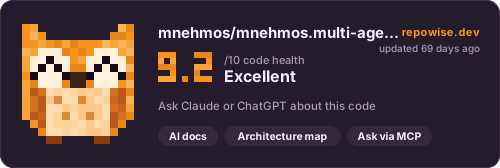
The codebase has 73 files and 21 symbols in 2 modules, led by JavaScript. Code health is 9.2 out of 10, rated excellent.
Getting started with mnehmos.multi-agent.framework
- Create the .roo directory and copy the baseline templates.
mkdir -p .roo - Copy the custom modes template into the .roo directory.
cp templates/custom_modes.yaml .roo/ - Copy the universal agent contract into the project root.
cp templates/universal/AGENTS.md .
Commands copied from the README
Mnehmos/mnehmos.multi-agent.framework FAQ
What is mnehmos.multi-agent.framework?
mnehmos.multi-agent.framework is a biological architecture for artificial minds. It organizes sensation, reflex, memory, and action into coordinated loops for chatbot-based agents.
How does mnehmos.multi-agent.framework work?
mnehmos.multi-agent.framework uses Central, Somatic, and Autonomic layers connected by an Observe, Orient, Decide, Act loop. Templates define specialized modes, and completed tasks return structured data.
How do I install mnehmos.multi-agent.framework?
mnehmos.multi-agent.framework is set up by creating .roo, copying templates/custom_modes.yaml and templates/universal/AGENTS.md, and adding global instructions to the IDE.
What language is mnehmos.multi-agent.framework written in?
mnehmos.multi-agent.framework is primarily written in JavaScript. Its repository also includes templates and Markdown integration documentation.
How is the mnehmos.multi-agent.framework code organized?
mnehmos.multi-agent.framework is organized into slash-commands, templates, meet-the-team, website, root, and .github directories. The templates directory defines modes, contracts, and tool integrations.
Who is mnehmos.multi-agent.framework for?
mnehmos.multi-agent.framework is for people building AI-assisted workflows that need coordinated modes, task loops, memory, tools, and validation. It supports several AI-assisted IDEs through templates.
What license does mnehmos.multi-agent.framework use?
mnehmos.multi-agent.framework uses the MIT license.
The summary, features and answers on this page are written by a model from the README and the source, and refreshed with each index.
About this page
Get a page like this for your own codebase
Repowise built this map of Mnehmos/mnehmos.multi-agent.framework from its source and git history. It parses every symbol, draws the dependency graph, scores each file's health from complexity, duplication, coverage and churn, finds hotspots and owners in the history, and writes documentation for every module. Your coding agent reads the same index over MCP, so its answers cite real files.
Prefer local? pip install repowise && repowise init indexes your own checkout, no account needed.
Maintain Mnehmos/mnehmos.multi-agent.framework?
Claim this page, add a badge to the README, or re-index it.
Claim this page
Sign in with GitHub and we check that you are an admin or maintainer of mnehmos/mnehmos.multi-agent.framework. Then add a badge to the README that links readers here.
Add a badge to your README
Every badge is public, cached, and updates on its own after every index. Nothing to install.
Repowise badge
Links to this page, with no score on it. Adding it also re-indexes the repo every week.

[](https://repowise.dev/repo/mnehmos/mnehmos.multi-agent.framework?src=badge_wiki)Code health badge
The repo's health score out of 10, from the latest index.

[](https://repowise.dev/repo/mnehmos/mnehmos.multi-agent.framework?src=badge_health)Code health card
A larger card with the score, its change since the last index, and when it was measured. The HTML version follows the reader's light or dark theme.

[](https://repowise.dev/repo/mnehmos/mnehmos.multi-agent.framework?src=badge_card)