



wger-project / wger
Self hosted FLOSS fitness/workout, nutrition and weight tracker
github.com/wger-project/wgerIndexed at 80d4a98Up to date with upstream
About this codebase
wger is a free workout and fitness manager: it consumes user intent and domain data (workouts, sessions, exercises, ingredients, translations, and fitness/nutrition metadata), runs it through Django-based workflows (models, APIs, background tasks, and UI rendering), and produces persisted fitness records plus shareable/served web interfaces (API responses, pages, and exported/translated content). In practice, a deployed instance is what users operate day-to-day, and it can be self-hosted with `docker compose up -d` in the normal “own your data” fashion.
Written by gpt-5.4-nano from the index
876 files and 4,910 symbols in 4 modules, led by Python (742 files) and Shell (6).
Code health
This codebase scores 7.5 out of 10 for code health, which we rate good. It also scores maintainability 8.9 and static performance 9.9 out of 10. The three are scored separately and never blended into one number. Risk is concentrated, as it usually is: 75 of 876 files are git hotspots, and they average 5.4 — which is where the fixes pay off most.
On the leaderboards:#11 of 44 Python repos
Do next
Nothing stands out in the week to Sep 14, the last indexed commit.
Improve what Repowise can see
Add a test coverage report
Without one, Repowise cannot tell tested code from untested code, so every test-related action says “unknown”.
- line coverage
- Unknown, no report
Small effort
Use wger-project/wger in your agent
Point Claude Code, Cursor, Codex or VS Code at this repository. Your agent gets the index this page is built from: cited answers, callers, history and health for any file.
https://api.repowise.dev/mcp/wger-project/wgerOne command, run anywhere. Adds the server to your local Claude Code config.
Docsclaude mcp add --transport http repowise https://api.repowise.dev/mcp/wger-project/wger \ --header "Authorization: Bearer rw_live_xxxxxxxxxxxxxxxxxxxxxxxxxxxxxxxx"
This repo is public, so anyone with a Repowise account and an API key can connect.
Try asking
- get_overview()
- get_answer("how is wger put together?")
- get_why("why is wger structured this way?")
Prefer local? pip install repowise && repowise init indexes your own checkout, no account needed.
Go deeper
- OverviewEverything the index found, what changed this week, commits and decisions.
- DocumentationModule-by-module documentation, 850 pages, 52 written by a model.
- ArchitectureDependency graph, layers and third-party dependencies.
- Code healthEvery file's score, the findings behind it, tests and refactoring plans.
- CommitsEach commit's effect on code health, with agent provenance.
- ContributorsWho owns what, and where one person holds most of the knowledge.
- DecisionsArchitectural decisions mined from commits and pull requests.
- Ask this codebaseSign inGrounded answers over the indexed code.
Maintain this repo? Claim the page
Sign in with GitHub and we check that you are an admin or maintainer of wger-project/wger. Then add a badge to the README that links readers here.
Use this repo from Claude or ChatGPT
Add this URL as a custom connector and sign in with repowise when asked. No API key to copy.
https://api.repowise.dev/mcp/wger-project/wgerFor maintainers
Add a badge to your README
Every badge is public, cached, and updates on its own after every index. Nothing to install.
Repowise badge
Links to this page, with no score on it. Adding it also re-indexes the repo every week.

[](https://repowise.dev/repo/wger-project/wger?src=badge_wiki)Code health badge
The repo's health score out of 10, from the latest index.

[](https://repowise.dev/repo/wger-project/wger?src=badge_health)Code health card
A larger card with the score, its change since the last index, and when it was measured. The HTML version follows the reader's light or dark theme.

[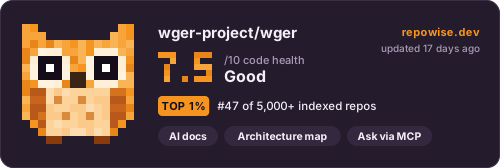](https://repowise.dev/repo/wger-project/wger?src=badge_card)How wger-project/wger works
Self hosted FLOSS fitness/workout, nutrition and weight tracker This page is a map of the wger-project/wger repository, written primarily in Python, rebuilt from the source each time it is indexed. Repowise parses every symbol, computes a dependency graph, scores per-file code health from complexity, duplication, test coverage and churn, mines git history for hotspots and ownership, and lifts the architectural decisions into documentation you can read here or query through MCP.
The codebase has 876 files and 4,910 symbols in 4 modules, led by Python, Shell and Dockerfile. Code health is 7.5 out of 10, rated good.
Use the links above to open each view, or connect this repository to your agent for grounded answers inside Claude, Cursor, Codex or VS Code.