v0.60.0
A PR bot that learns from your team
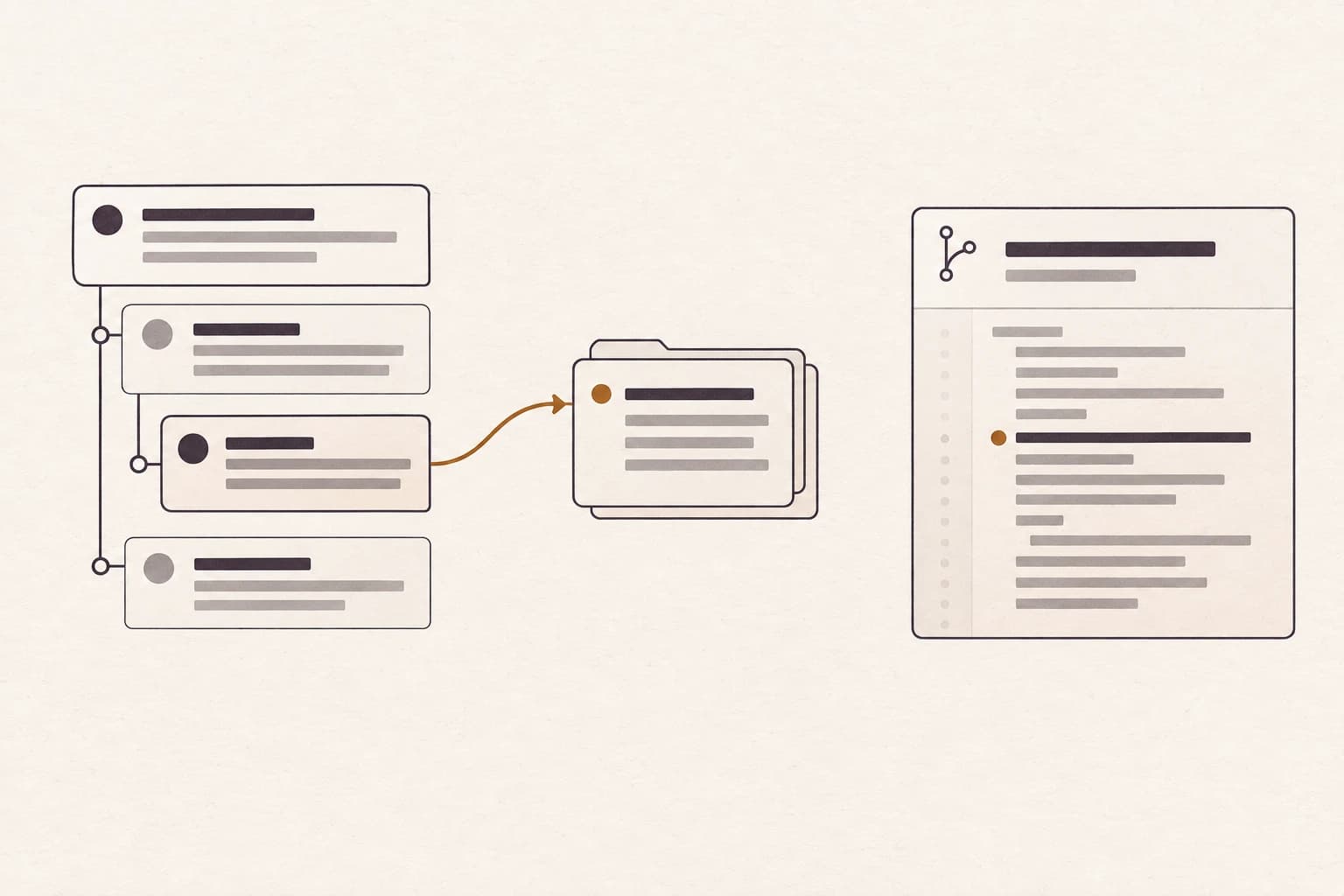
This cycle taught the PR bot to learn from the people who review with it. A reply on a review thread becomes a decision, later reviews apply it and say so, and your coding agent can review and add decisions for you. On repowise.dev the PR page opens on a merge decision and Quick setup connects your agent, the PR bot and coverage in one flow. The open-source release, 0.60, makes every agent call count.
Reviews that remember your decisions
On repowise.dev.
- Reply to a finding with the reason the code is the way it is. When you have
write access, the reply is saved as a decision, quoted word for word, and
the bot answers in one line naming who accepted it, with a link and
"reply
/repowise forgetto undo". A reply from anyone else is saved as a candidate for a maintainer to confirm. - A reply that says what to flag or leave out becomes a review preference on that file.
- When a decision shapes a later review, the review names it under "Applied decision". A change that breaks a decision your team accepted gets one finding that cites it, and never blocks the merge.
- The sticky comment adds one line, "Learned from this PR", only when the pull request taught the bot something.
- The decisions page shows where each decision came from (the review thread and who accepted it), how many reviews applied it and on which pull request it was last applied.
- Your coding agent can review decisions too: the decisions page copies a
prompt that has it check each candidate against the code and confirm or
dismiss it with a reason, and another that has it record missing decisions
for your busiest files. A decision your agent accepted says so, next to
Undo. Agents on the hosted MCP can add, accept and undo decisions with the
decisiontool, which you turn on in your MCP settings. - "Learn from replies" in the PR bot settings chooses whether a reply from someone with write access is accepted automatically, saved for someone to accept, or not learned from.
A PR page that opens on the merge decision
On repowise.dev.
Each pull request page leads with one call: blocked, review before merge, worth a look, or looks safe to merge. Findings are grouped by what needs attention, and "Copy fix prompt for your agent" hands the whole fix over in one step. Readers can vote on each point, and "View on Repowise" links the bot's comment to the page. Private repositories get the same page when you are signed in.
The knowledge graph as a C4 map
On repowise.dev and in the open-source release.
Containers such as the CLI, API and web app sit beside the external systems
they talk to (databases, network clients, model services), with labelled
arrows laid out by dependency direction. Cards show a summary, top children
and a health score, / searches layers, folders, files, containers and
externals.
Quick setup
On repowise.dev.
One guided flow connects your coding agent, turns on the PR bot and adds test
coverage, with a check on each step. It opens from the indexing page, the
dashboard and /setup.
Agents do more with fewer calls
Open-source release.
get_answercites the lines it rests on: answers that cite a line went from 49% to 86% on one synthesis model and from 22% to 90% on another.get_whyquotes the comment or the commit body that states the reason.get_change_risk(per_commit=True)scores every commit of a branch in one call: ten commits in 7.9 s and 4.4 KB, against 150 s and 94 KB one by one.- The tool list sent on every turn is 41% smaller, and the generated CLAUDE.md and AGENTS.md route each task to Grep or one named call.
repowise init --yesinstalls the agent hooks and an MCP entry Claude Code loads.
A wiki you read front to back
Open-source release.
An overview written for a first-time reader, then Getting Started and How It Works in order. Walkthrough pages trace one operation end to end with every step excerpted, module pages map their parts, the sidebar reads as a table of contents, and citations open the exact lines at the indexed commit.
Call graphs the compiler agrees with
On repowise.dev and in the open-source release.
C++, C#, Java, Kotlin, Rust and Pascal resolve inherited members, overloads,
field paths and typed locals, each change graded against the language's own
compiler. Pascal resolves uses through each project's search paths.
Faster updates
Open-source release.
A one-file edit patches the graph in place: on a 6,944-file repository the graph step takes 8 to 11 s, where a full rebuild took 65 s. An update reads the stored health report back instead of re-scoring every file, and the git, health and dead code steps run several times faster on large repositories.
Also in this release
- On repowise.dev, a failed index names why it failed and offers the recovery that cause calls for, and long steps show their sub-steps.
- On repowise.dev, workspaces take a few clicks to create, connect to an editor and put under the PR bot.
- Confirming a decision with no reason asks "Why does this hold?" and saves your answer.
- Decisions mined again with new wording fold into the record that holds them: on the repowise repository, 462 mined records collapse to 187.
- Every health score reads on five bands, from At risk to Excellent.
- Review is a top-level page in the local web UI, beside Overview and Chat.
- Local models get material sized to their context window: a module page on a laptop GPU takes about a minute, from about nine minutes.
Upgrading
pip install --upgrade repowise
Nothing needs re-indexing. The first repowise update after upgrading
rebuilds the wiki once in its new shape, re-scores health and walks git
history once, on its own. On repowise.dev, each repository picks up the new
graph and scoring on its next index.
Thank you
This release includes work from 58 contributors outside the core team.
- @rishu685#3880, #4120, #4344, #4579, #4593, #4594, #4646, #4647, #4722, #4739, #4901, #4902, #4965, #5083
- @Aman-goel-04#4266, #4392, #4393, #4395, #4510, #4731, #4833, #4869
- @sloemo01#1812, #1961, #2040, #2041, #2110, #2343, #4910
- @ANO3457#4625, #4641, #4700, #4743, #4936
- @HengYangDS#4881, #4929, #4937, #4938, #5207
- @jsolemd#4725, #4726, #4728, #4780
- @ZhangDT-sky#4701, #4805, #4870
- @Asymtode712#4748, #5166
- @dchaudhari7177#4620, #4631
- @deven1003#4804, #4807
- @iamcipherdev#4876, #4877
- @Kashyap-Acharya#4983, #4985
- @Laex#4880, #5213
- @Marko0519#4195, #4808
- @ozenyunus35#3923, #4644
- @RagedPanda#4984, #5172
- @1AbdullahButt#5062
- @aazminu#4027
- @akshatmalik-bruh#2090
- @Architcybercrime#4802
- @Ayush7614#1803
- @bercedev#4315
- @bfs2021#4986
- @canblmz1#4501
- @cf3901646#5014
- @CoDe-ReDz#4801
- @crown-sports#4709
- @developerjillur#4871
- @digimangos#5056
- @ENCHIGO#4749
- @florianaltendorfer#4576
- @GitMehdi-sys#4634
- @HarshithJeevan-pixel#5171
- @irankunda-Steve#5008
- @jgt87#4735
- @juliasadler#4343
- @justonemorenight#2220
- @left-big-toe-of-oppenheimer#5017
- @littfed#4533
- @lizuyi-6#4872
- @lntutor#1099
- @macholul#4391
- @mazenaly256#4618
- @mechmaster20#5105
- @MvMSOLO#4719
- @Nithin0620#2018
- @nosmile99#4857
- @NullSense#1858
- @Pratham2511#4810
- @r0nik123#5019
- @RajjBhardwaj#4736
- @rhmatzeka#4987
- @rubenG1009#4879
- @soumojit-D48#5029
- @suyashgitt#4982
- @thymeed#4729
- @Vamsi-2581#5162
- @Yi-111-a#4192
Run this release on your repo.
Index a repository free and see what this release finds in it. Rolling it out to a team? We will walk you through it.