Codebase intelligence, explained
Guides on auto-generated documentation, MCP tools for AI agents, git intelligence, and how repowise compares to other tools.
All posts
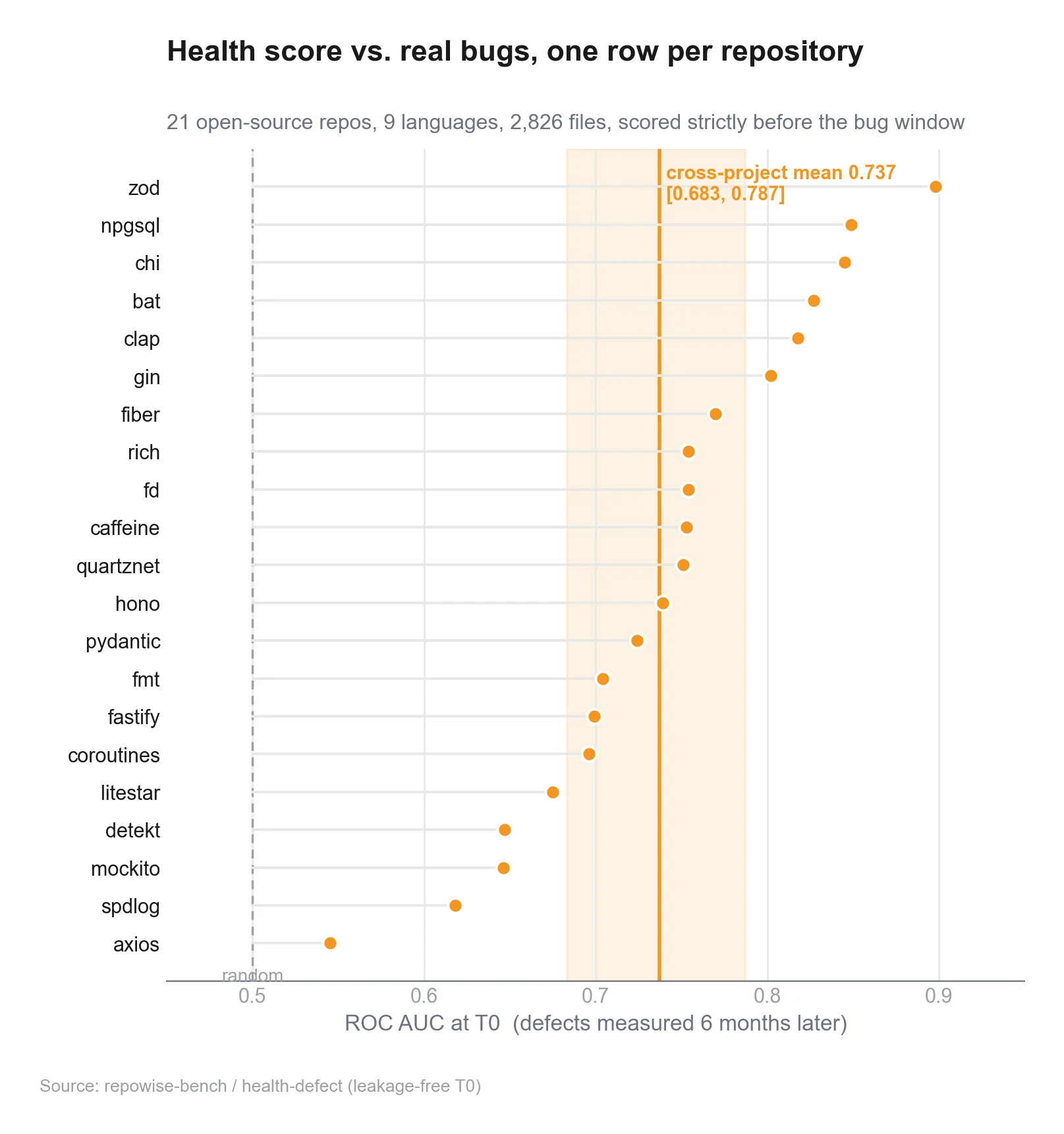
Does Code Health Predict Bugs? 21 Repos, 9 Languages, ROC AUC 0.74
A reproducible defect-prediction study: 21 repos, 9 languages, 2,770 labeled files, ROC AUC 0.74, and 2.3x more defects caught under a fixed review budget.
Onboard Engineers Faster on Any Codebase
Onboard engineers faster on any codebase with an auto-generated wiki and 10 MCP tools that recover the why behind legacy code. See the 30-day approach inside.
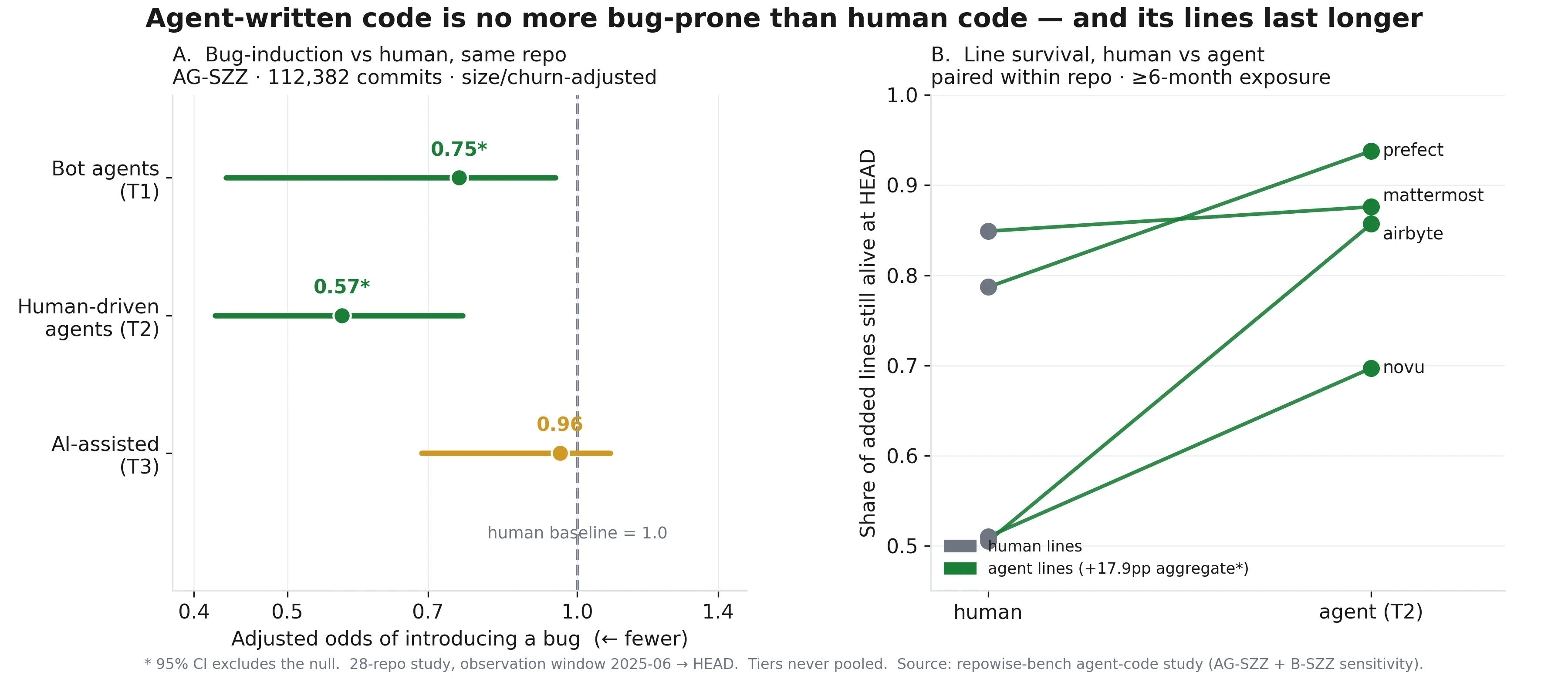
Is AI-written code buggier than human code? We blamed 112,000 commits to find out
We git-blamed 112,382 commits across 28 repos to test if AI-agent code is buggier than human code. Controlled for size, it isn't, and its lines last longer.
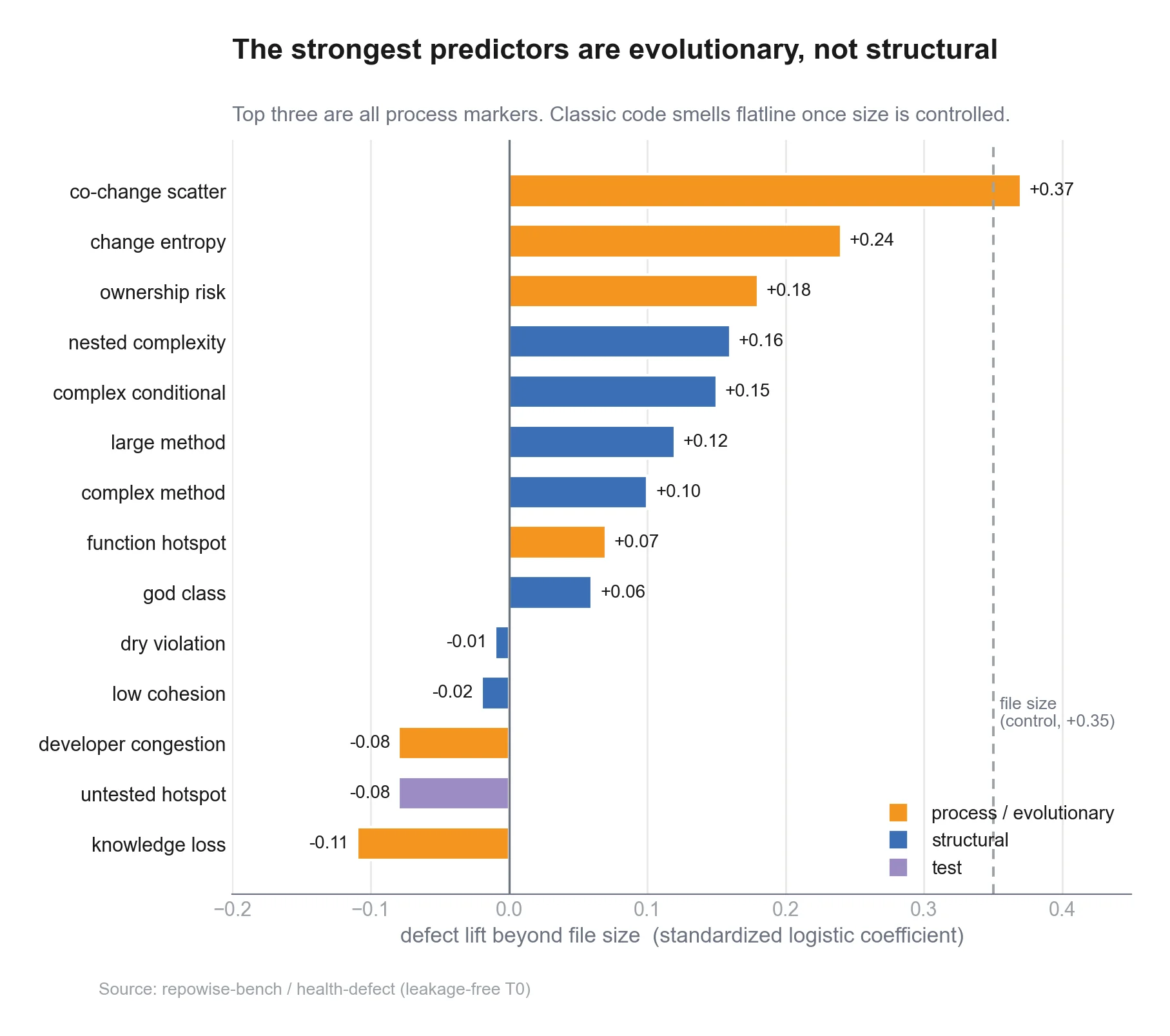
Process metrics beat structural metrics for predicting defects
Complexity and code smells get attention. Across 21 defect-risk markers and 21 repos, the strongest predictors were evolutionary, not structural, size controlled.
Best AI Code Review Tools (LLM-Based and Deterministic)
Best AI code review tools fall into two camps: LLM-based reviewers that try to reason about intent, architecture, and change impact, and deterministic…
Best Architecture Documentation Tools (C4, Diagrams, Decisions)
Compare Structurizr, IcePanel, Mermaid, PlantUML and repowise for C4 diagrams and architecture decision records, and see which keeps docs in step with the code.
Best Code Health Tools in 2026
Best code health tools in 2026 are the ones that measure more than static warnings. They show where change is concentrated, where complexity is rising, where…
Best Code Search Tools for Engineering Teams
Compare Sourcegraph, Greptile, GitHub code search, Zoekt and repowise on exact, symbol and semantic search, self-hosting and index freshness at team scale.
Best Codebase Documentation Tools for AI Coding Agents
Documentation tools for AI coding agents have changed fast. The old question was “what docs should humans read?” The new one is best codebase documentation…
Best Codebase Visualization Tools (Graphs, Maps, Diagrams)
A hands-on comparison of Structurizr, CodeSee, Sourcetrail, Madge and repowise for dependency graphs, C4 diagrams and code maps you can act on.
Best Dead Code Detection Tools (Open Source and Commercial)
Best dead code detection tools are only useful if they match the kind of dead code you actually ship. Unreachable files, unused exports, and zombie packages…
Best Dependency Graph Tools for Monorepos
Compare Nx Graph, Turborepo, Madge, Dependency-Cruiser and repowise on package and symbol-level edges, circular dependency detection and change impact.